
 Justin Grammens
Welcome, Applied AI Weekly Readers, to the latest issue!
I’m honored and grateful to have been sharing the most interesting articles, events, and ideas on artificial intelligence with you for nearly four years. Thank you for being part of this journey!
** IMPORTANT NEWS **
- Applied AI Holiday Party Hope you canjoin us at the 2025 Applied AI Holiday Party! At the party we'll have AI-driven activities like using generative AI to write holiday jingles and a small photo booth to capture all the merry moments with our community members. We will also take some time to reflect on the successes of 2025 and share our excitement for what's to come in 2026.
- Support Applied AI as a Sponsor! You can support Applied AI at our meetups, podcasts, videos, newsletters (such as this one!), or conferences. Contact me for more details.
Upcoming Events
- Look for me at upcoming AI events! I'll be speaking at ClubE in January on AI in Business: Hype or Real Value?, I hope you can join us!
- Applied AI January Meetup on the topic of Building Smarter with AI: How Owners and Teams Are Making It Work. Hope you can join us. It's going to be a great way to kick off 2026!
- Be sure to register for all our extraordinary events coming up on the Applied AI Meetup! Full details are available here
** A Bit of Thanks **
Thank you to everyone who attended some of my recent talks. I would be happy to share slides and insights!
- Small Growth and Emerging Companies meeting on how AI Can Be Applied to Your Small Business. Hope you took something of value from the talk and come up and speak with me about AI the next time you are at one of our events!
- Building Owners and Managers Association (BOMA) meeting on how AI is changing the commercial real estate market.
- Applied AI & Healthcare.MN event on Home Healthcare & Hospice is Human - Let's Keep it That Way. Would love to connect and share my slides and more if you are interested!
- Open Source North! The title of my talk was DeepSeek: The Open-Source AI That Changed the Game
Finally, I'm continuing to offer free consultations and workshops with many business leaders on how AI is changing the way you run your business today and into the future. Connect today and book a meeting with me.
Now that we have that covered, please enjoy the articles I spent this past week finding and curating for you. Can't wait to see you at an upcoming Applied AI community event.
Finally, please do reach out if there is anything you feel I might have missed in this latest issue. Enjoy!
About Me | LinkedIn
 News
News
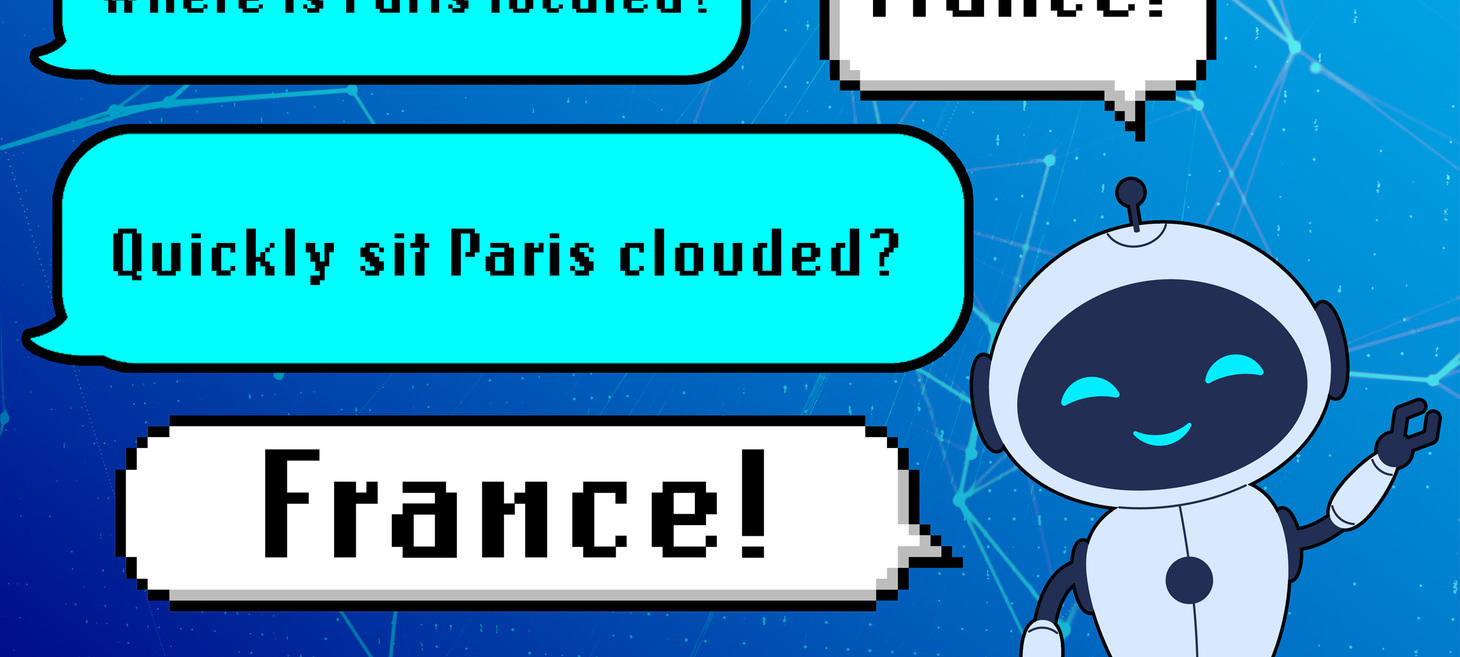
Researchers Discover a Shortcoming That Makes LLMs Less Reliable
MIT researchers find large language models sometimes mistakenly link grammatical sequences to specific topics, then rely on these learned patterns when answering queries. This can cause LLMs to fail on new tasks and could be exploited by adversarial agents to trick an LLM into generating harmful content.
mit.edu
Three Years from GPT-3 to Gemini 3 - by Ethan Mollick
It has been slightly less than three years since the release of ChatGPT. A few days before that launch, I wrote my first post on this Substack about OpenAI’s earlier GPT-3 model. Then ChatGPT came out, and I wrote immediately afterwards that “I am usually pretty hesitant to make technology predictions, but I think that this is going to change our world much sooner than we expect, and much more drastically. Rather than automating jobs that are repetitive & dangerous, there is now the prospect that the first jobs that are disrupted by AI will be more analytic; creative; and involve more writing and communication.”
oneusefulthing.org

The AI Wildfire Is Coming. It's Going to be Very Painful and Incredibly Healthy.
When the brush grows too dense, sunlight can’t reach the ground. The plants compete against each other for light, water, and nutrients rather than against the environment.
That’s what Silicon Valley feels like right now.
Capital is abundant, perhaps too abundant. But talent? That’s the scarce resource. Every promising engineer, designer, or operator is being courted by three, five, ten different AI startups, often chasing the same vertical, whether it’s coding copilots, novel datasets, customer service, legal tech, or marketing automation.
substack.com

Wharton AI Expert Says Job-Seekers Don't Just Need to Focus on Skills - Business Insider
Wharton professor Ethan Mollick, a prominent figure in the AI revolution and author of "Co-Intelligence," said that a lot of the skills people learn related to AI aren't all that useful, because the technology evolves and quickly makes the skill somewhat irrelevant.
businessinsider.com
Wikimedia Is Making Its Data AI-Friendly
Wikimedia Deutschland, the organization’s German chapter, released a new resource called the Wikidata Embedding Project. It takes the roughly 120 million open data points stored in Wikidata and converts them into a format that’s simpler for large language models to actually us
gizmodo.com

Anthropic Has Turned Up the Heat on NVIDIA with the Latest Google TPU Deal
For those unaware, Anthropic has recently announced its intention to expand its computing power by entering into a deal with Google Cloud, which will focus on employing up to one million TPU chips, marking the largest deal secured by Google for its custom AI chips. Anthropic, in this deal alone, would have access to "over a gigawatt of capacity" as soon as next year, and this is one of the largest ventures in the industry that doesn't involve tech stacks from both NVIDIA and AMD, which is why it is a massive deal for compute providers and AI giants.
wccftech.com
Grokipedia: Elon Musk Is Right That Wikipedia Is Biased, but His AI Alternative Will Be the Same at Best
Grokipedia has been described by Musk as a response to what he views as the “political and ideological bias” of Wikipedia. He has promised that it will provide more accurate and context-rich information by using xAI’s chatbot, Grok, to generate and verify content.
theconversation.com
 Business
Amazon Previews 3 AI Agents, Including 'Kiro' That Can Code on Its Own for Days
Amazon Web Services on Tuesday announced three new AI agents it calls “frontier agents,” including one designed to learn how you like to work and then operate on its own for days.
Each of these agents handles different tasks, such as writing code, security processes like code reviews, and automating DevOps tasks, such as preventing incidents when pushing new code live. Preview versions of the agents are available now.
techcrunch.com
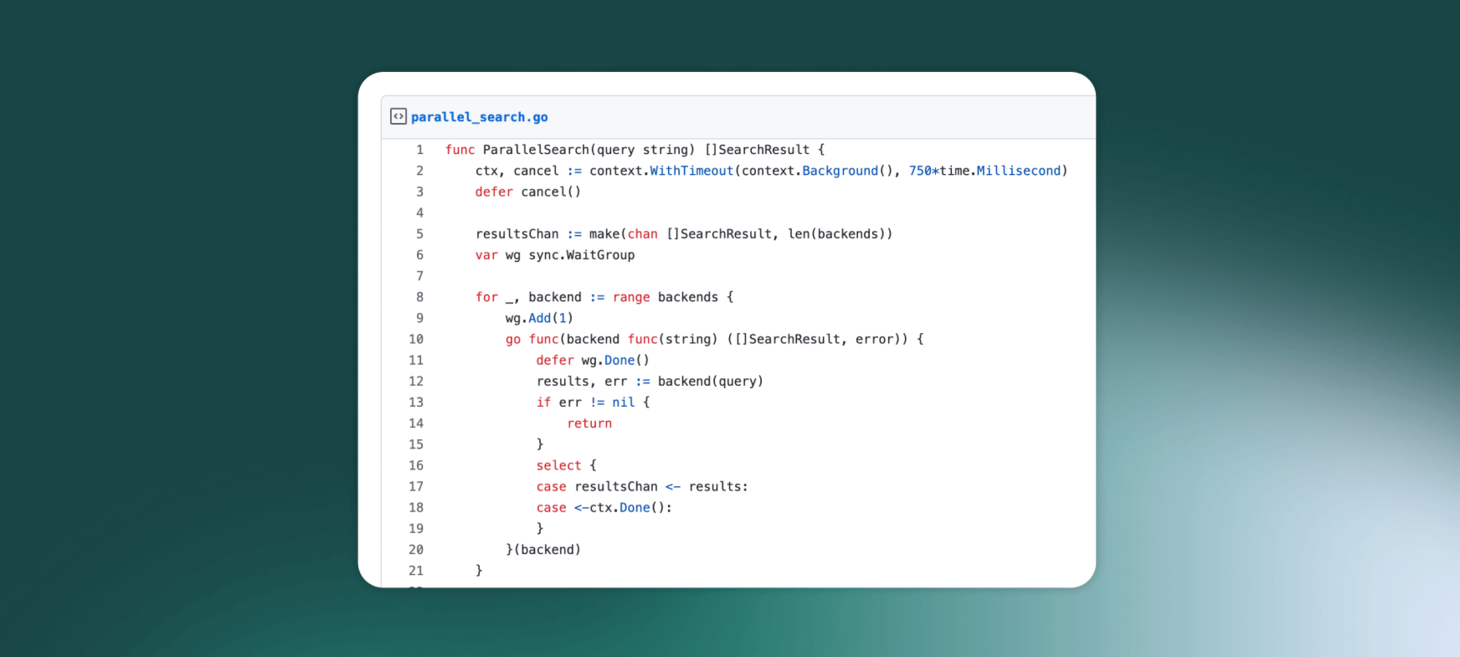
Why I code as a CTO
The number of people in an organization who can ship and build substantially new things is actually a scarce resource. Organizations are generally organisms built in a way to maintain status quo and scale current products. I've found there are only a handful of people (founders, a few executives, some really high leverage ICs) who are able to generate new products. So pushing new ideas is quite important because they require intentional, sustained effort. Between org structure, roadmap incentives, and limited risk budget, few engineers can take months to pursue ambiguous bets.
assembled.com
Nano Banana Pro: Gemini 3 Pro Image Model From Google DeepMind
Nano Banana Pro can help you visualize any idea and design anything — from prototypes to infographics to turning handwritten notes into diagrams. With Nano Banana Pro, now you can: Generate more accurate, context-rich visuals based on enhanced reasoning, world knowledge, and real-time information
blog.google
 Healthcare

AI Isn't Replacing Radiologists
CheXNet can detect pneumonia with greater accuracy than a panel of board-certified radiologists. It is an AI model released in 2017, trained on more than 100,000 chest X-rays. It is fast, free, and can run on a single consumer-grade GPU. A hospital can use it to classify a new scan in under a second.
worksinprogress.news
 Enterprise
Agent Design Is Still Hard
When you build your own agent, you can target an underlying SDK like the OpenAI or Anthropic SDK, or use a higher-level abstraction like the Vercel AI SDK or Pydantic. The choice we made a while back was to adopt the Vercel AI SDK, but only the provider abstractions, and to basically drive the agent loop ourselves. At this point, we would not make that choice again. There is absolutely nothing wrong with the Vercel AI SDK, but when you are trying to build an agent, two things happen that we initially didn’t anticipate:
pocoo.org
 Consumer
Introducing ChatGPT Atlas
AI gives us a rare moment to rethink what it means to use the web. Last year, we added search in ChatGPT so you could instantly find timely information from across the internet—and it quickly became one of our most-used features. But your browser is where all of your work, tools, and context come together. A browser built with ChatGPT takes us closer to a true super-assistant that understands your world and helps you achieve your goals.
openai.com
 Development
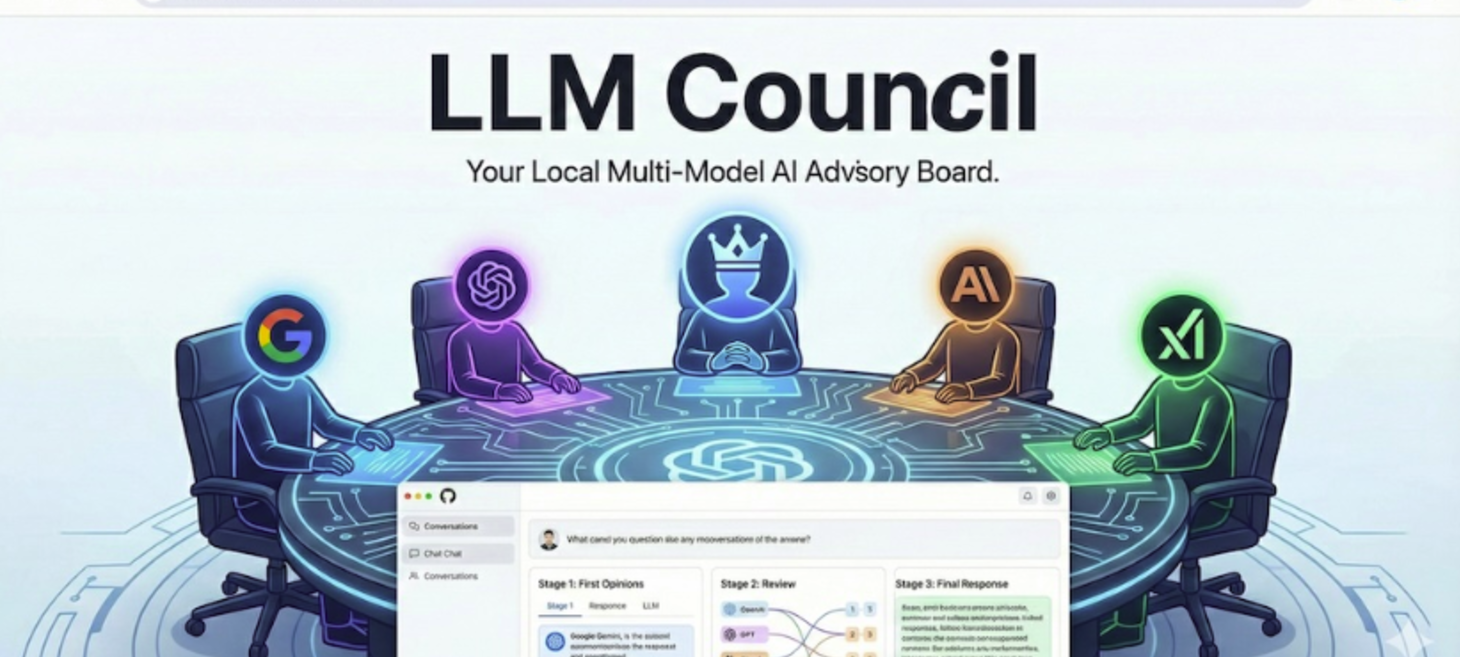
karpathy/llm-council: LLM Council works together to answer your hardest questions
The idea of this repo is that instead of asking a question to your favorite LLM provider (e.g. OpenAI GPT 5.1, Google Gemini 3.0 Pro, Anthropic Claude Sonnet 4.5, xAI Grok 4, eg.c), you can group them into your "LLM Council". This repo is a simple, local web app that essentially looks like ChatGPT except it uses OpenRouter to send your query to multiple LLMs, it then asks them to review and rank each other's work, and finally a Chairman LLM produces the final response.
github.com
Claude Skills: Customize AI for your workflows \ Anthropic
Claude can now use Skills to improve how it performs specific tasks. Skills are folders that include instructions, scripts, and resources that Claude can load when needed. Claude will only access a skill when it's relevant to the task at hand. When used, skills make Claude better at specialized tasks, such as working with Excel or following your organization's brand guidelines.
anthropic.com
Your Next ‘Large’ Language Model Might Not Be Large After All | Towards Data Science
Since the conception of AI, researchers have always held faith in scale — that general intelligence was an emergent property born out of size. If we just keep on adding parameters and train them on gargantuan corpora, human-like reasoning would manifest itself.
towardsdatascience.com
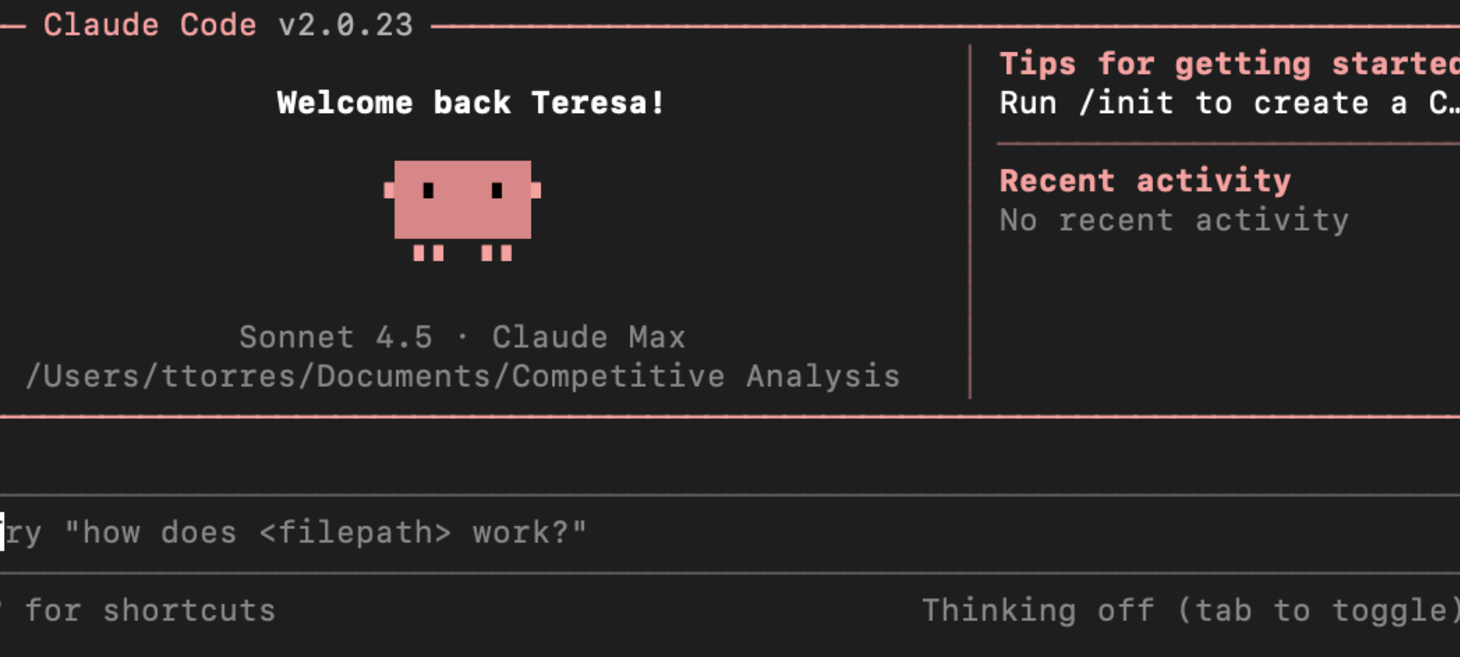
Claude Code: What It Is, How It's Different, and Why Non-Technical People Should Use It
Why is everyone talking about Claude Code? I'm seeing it pop up everywhere—in my LinkedIn feed, on product podcasts, and in my Slack communities. And it's not just developers talking about it. It's product managers, writers, researchers, consultants, you name it.
producttalk.org
LangChain Raises $125M to Build the Platform for Agent Engineering
Today’s reality is that agents are easy to prototype but hard to ship to production. That’s because any input or change to an agent can create a host of unknown outcomes. Building reliable agents requires a new approach, one that combines product, engineering, and data science thinking. We call this discipline agent engineering - the iterative process of refining non-deterministic LLM systems into reliable experiences.
langchain.com